planning 3 min read
Symbolic vs Civil Wedding in Italy: What's Right for You?
A clear comparison of symbolic and civil wedding ceremonies in Italy — legal requirements, creative freedom, pros and cons for international couples.
Choosing between a symbolic and civil ceremony is one of the first decisions you'll make when planning your Italian wedding. Both options have significant advantages, and the right choice depends on your priorities.
Civil Ceremony: The Key Facts
- Legally binding in Italy and internationally recognised
- Performed by an Italian registrar (ufficiale di stato civile)
- Can take place at the town hall (comune) or approved external venues
- Requires the Nulla Osta (Certificate of No Impediment) from your embassy
- Part of the ceremony is conducted in Italian
- Standard vows — limited personalisation
- Requires two witnesses with valid photo ID
- Marriage certificate issued by the Italian state
Pros
- Legally recognised everywhere
- Romantic to be officially married in Italy
- Italian marriage certificate as a memento
Cons
- Significant paperwork (3–4 months preparation)
- Part of the ceremony is in Italian (translator may be needed)
- Limited choice of venue (must be approved)
- Less personalisation of vows and ceremony structure
- Requires appearing at the comune days before the wedding
Symbolic Ceremony: The Key Facts
- No legal standing — you'll need to marry legally elsewhere
- Complete creative freedom — any location, any format, any words
- No Italian paperwork required
- Choose your own celebrant (friend, professional celebrant, etc.)
- Write your own vows
- Any venue, any time, any style
- No restrictions on structure or content
Pros
- Total creative freedom
- No bureaucracy or paperwork
- Can be held anywhere — garden, vineyard, beach, rooftop
- Personalised vows and ceremony structure
- Can be in any language
- Simpler and less stressful to organise
Cons
- Not legally binding — must marry legally elsewhere
- Some guests may feel it's "not a real wedding" (though attitudes are changing)
The Most Popular Approach
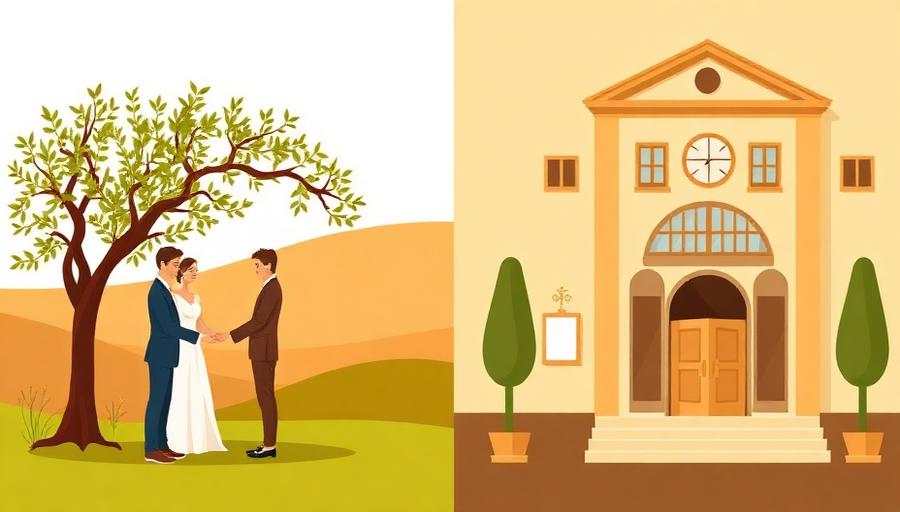
A symbolic ceremony in Tuscany combined with a legal marriage at home is a common choice, and one several venues are set up for — Villa Le Fontanelle, for instance, states that civil ceremonies must be arranged with the City of Florence while symbolic ones can take place at the villa. We have no figures on how many couples choose it, and any site that gives you a percentage is guessing. What we can say is why it appeals:
- Eliminates Italian paperwork entirely
- Gives you complete creative freedom
- Lets you celebrate exactly how you want
- Reduces stress and planning complexity
- Often saves money (no commune fees, translator fees, etc.)
How It Works in Practice
Before or after Tuscany:
- Quick registry office ceremony in your home city (30 minutes, 2 witnesses)
- This makes you legally married
In Tuscany:
- Beautiful personalised symbolic ceremony
- Vows you've written yourselves
- Celebrant of your choice
- Any venue, any time, any style
- This is your "real" wedding celebration
What About Religious Ceremonies?
Catholic ceremonies in Italy are legally binding but require:
- Approval from both your home diocese and the Italian diocese
- Additional documentation (baptism certificates, pre-marriage course)
- 3–6 months of preparation
- The ceremony must take place in a Catholic church
Other Christian denominations and faiths may also conduct legally recognised ceremonies — check with your planner for specific requirements.
Frequently Asked Questions
Is a symbolic ceremony recognised anywhere?
No. It has no legal standing. You need to marry legally in another ceremony (usually at home).
Can we have a symbolic ceremony in a church?
Generally no. Churches require religious ceremonies. However, some deconsecrated chapels can be used for symbolic ceremonies.
Do guests care if it's symbolic?
Unless you tell them, most will not be able to tell the difference — the day looks and feels the same. Whether it matters to the people closest to you is worth thinking about in advance rather than on the day, and it is usually a conversation with parents rather than with guests.
Can I have both on the same trip?
Yes — some couples have a brief civil ceremony at the comune on Thursday or Friday, then the symbolic celebration on Saturday. Your planner can coordinate this.
Which is cheaper?
Symbolic is typically cheaper — no commune fees, no legal document fees, no translator fees. Savings of €500–€1,500.
How do I find a celebrant?
Your wedding planner can recommend experienced celebrants who specialise in personalised ceremonies for international couples.
Our Recommendation
For most international couples, symbolic in Tuscany + legal at home is the best approach. It's simpler, more creative, less stressful, and the ceremony will feel exactly as special and real as you make it.
Get matched with planners who specialise in creating unforgettable symbolic ceremonies.
- planning
- legal
Written by Tuscany Wedding List. Prices and requirements change — if something here is out of date, tell us and we will correct it.