Skip to content
Tuscany Wedding List
Chianti, Tuscany

Getting married in Chianti

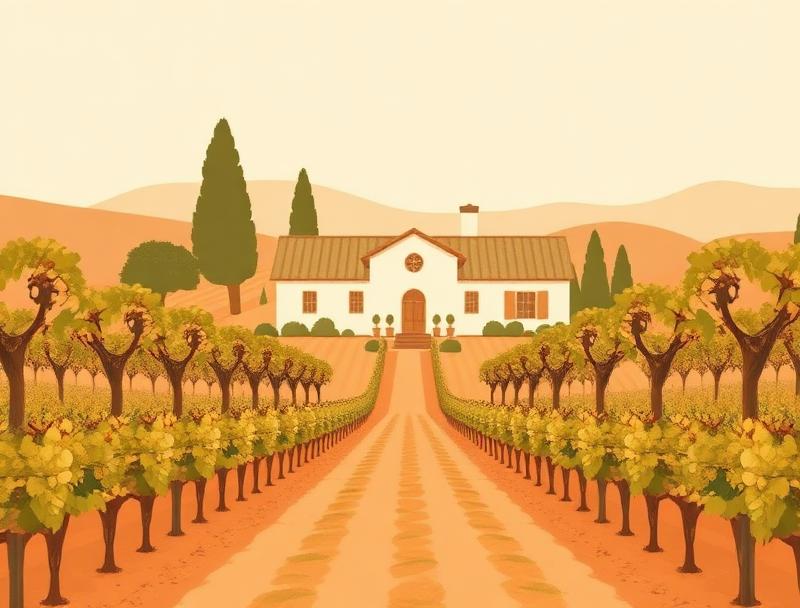
Chianti is the Tuscany most couples picture — vineyards, stone farmhouses, long tables under trees — and it sits conveniently between Florence and Siena. It also has something Florence does not: comuni that will marry you legally at a private villa, at a published price.

Sources checked 14 September 2026

What Chianti actually is

The Chianti Classico zone covers 70,000 hectares across the provinces of Florence and Siena. Four comuni lie entirely inside it — Castellina, Gaiole, Greve and Radda in Chianti — with parts of Barberino Tavarnelle, Castelnuovo Berardenga, Poggibonsi and San Casciano in Val di Pesa.

That matters practically, because your comune determines the rules and the fees, and in Chianti you are likely to be dealing with a small one. Small comuni are often more flexible about where a ceremony can happen and slower to answer email in August.

You can marry legally at a villa here

This is the single strongest argument for Chianti over Florence.

Greve in Chianti authorises private properties for civil ceremonies and publishes the fees. Its own list names the Sala Consiliare in Piazza Matteotti (maximum 40 people), the Castello di Vicchiomaggio, the Borgo di Vignamaggio, the Terrazza del Museo di San Francesco and the former chapel of San Michele Arcangelo. For non-residents: the Sala Consiliare costs €500 Monday to Friday and €900 on Saturday; the villas €1,500 on weekdays and €2,000 at weekends; San Michele and the Terrazza €800 and €1,200.

Radda in Chianti publishes a 2026 tariff too, celebrating in the Sala del Podestà and the Loggiato: non-resident foreign citizens pay €800 for a 9:00–12:00 slot, €900 at other hours and €1,200 on holidays.

So a legal ceremony and the party can happen in the same place — which in Florence they usually cannot. Confirm the date with the stato civile office at least thirty days ahead in Greve, and pay at least five days before; Radda wants payment two weeks before.

Getting here

Florence's airport is the natural arrival point, with Pisa a longer but often cheaper alternative. From there everything is a drive, and the drive is the part guests underestimate.

Chianti roads are winding, narrow and slow, and a good number of estate approaches are *strade bianche* — white gravel roads. Distances look short on a map and take much longer in practice.

Plan transport as a fixed cost rather than an afterthought. There are no taxis to hail, ride-hailing is unreliable outside the cities, and guests who have spent an evening in a wine region should not be driving back on unlit roads. Coaches are the norm, not an extravagance.

When to come, and the harvest

The Chianti hills are cooler than Florence in its river basin, but the shape of the year is the same: hot and dry in July and August, most comfortable in May and early June, wetter in September and October. Our best months guide has the figures.

The local complication is harvest. Late September and early October are when a working wine estate is doing its actual work. It is atmospheric to be there for it — and it competes with your wedding for space, staff and attention. If you are marrying at a producing estate in those weeks, ask directly what harvest means for your day.

The kinds of venue you will find

Working wine estates, where the vineyard is the business and weddings are a sideline — usually with their own cellars, sometimes with rooms.

Borghi: restored hamlets where guests stay across several buildings and the whole village can be taken exclusively.

Historic villas with formal gardens, often family-owned and run.

Agriturismi and farmhouse estates, the most affordable option, generally with fewer beds and a simpler offer.

The common thread is that you are hiring a property for days rather than a room for an evening. Our venues guide covers what to ask.

Worth knowing before you commit

Gravel and heels. Tell guests about the ground. Every Chianti wedding has someone crossing a gravel courtyard in the wrong shoes.

One road in. Ask how a coach reaches the property, not just a car. Some approaches will not take one.

Mobile signal is patchy. Do not build the day's logistics on the assumption that everyone can be reached.

Beds run out early. Villages are small and the nearest alternative accommodation may be twenty minutes away.

Ask the comune yourself. The fees above are published, but availability is not — small offices have few ceremony slots, and they go early.

Sources

The figures, rules and deadlines on this page come from these — comuni, regional bodies and official registers, not other wedding sites. Rules change; confirm anything you are about to act on.

  1. www.chianticlassico.com · checked 14 September 2026 Chianti Classico zone: 70,000 hectares; entirely Castellina, Gaiole, Greve and Radda in Chianti, partly Barberino Tavarnelle, Castelnuovo Berardenga, Poggibonsi and San Casciano in Val di Pesa
  2. www.comune.greve-in-chianti.fi.it · checked 14 September 2026 Greve in Chianti: authorised settings including Sala Consiliare (max 40), Castello di Vicchiomaggio, Borgo di Vignamaggio, Terrazza del Museo di San Francesco, ex cappella di San Michele Arcangelo; non-resident fees…
  3. www.comune.raddainchianti.si.it · checked 14 September 2026 Radda in Chianti 2026 tariffs: non-resident foreign citizens €800 for 9:00–12:00, €900 other hours, €1,200 holidays; Sala del Podestà and Loggiato; payment at least two weeks before
  4. www.lamma.toscana.it · checked 14 September 2026 Florence climate normals 1991–2020 as the regional pattern

Keep planning your Chianti wedding

Related planning guides

Where to marry

Tuscany is not one place, and the eleven areas couples usually choose between suit genuinely different weddings. This page is a way of deciding rather than a ranking: the four questions that actually separate the areas, and what each one means for the day you are planning. The detail for each area lives on its own page.

Read guide

How much does it cost?

Almost every figure you will read about Tuscany wedding costs is someone's estimate presented as a fact. This page takes a different approach. It sets out the costs that are genuinely published — town hall fees, stamp duties, consular charges, all of them sourced and linked — and then explains, without inventing numbers, how the quotes for everything else are built and what moves them. It is less tidy than a price list. It is also true.

Read guide

Legal requirements

Most of the paperwork for an Italian wedding comes down to one question: can the registrar see proof that nothing in your own country's law prevents you from marrying? That proof is called a nulla osta, and where you get it depends entirely on which passport you hold. This page sets out the steps in the order you will meet them, and says clearly where the answer depends on your own embassy and the particular town hall.

Read guide

Checklist

Most wedding checklists are built around a generic timeline. This one is built around the deadlines that actually exist in Italy — the notice periods comuni publish, the expiry dates on consular documents, and the handful of things that can only be done in person. Where a date is fixed by an authority, it is sourced. Where it is judgement, it says so.

Read guide

Related vendors

Planning a wedding in Chianti?

Discover venues, vendors and guides made for couples planning from abroad.

Start planning your wedding
Get matched Request quotes