Skip to content
Tuscany Wedding List
Val d'Orcia, Tuscany

Getting married in Val d'Orcia

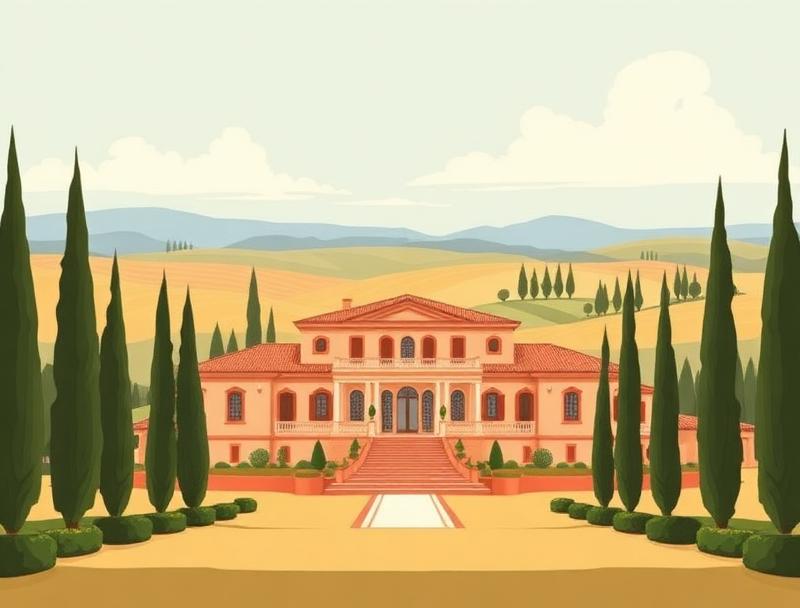
Val d'Orcia is the Tuscany of the postcards — cypress ridges, conical hills with fortified villages on top, and light that photographers travel for. It is also a protected UNESCO landscape with real constraints, the furthest corner of the region from both airports, and the place where accommodation runs out fastest.

Sources checked 14 September 2026

A World Heritage landscape, and what that means

Val d'Orcia was inscribed on the UNESCO World Heritage list in 2004, under criteria (iv) and (vi), covering 61,187.96 hectares with a further 5,660 hectares of buffer zone. UNESCO describes "flat chalk plains out of which rise almost conical hills with fortified settlements on top", a landscape redrawn in the 14th and 15th centuries to "reflect an idealized model of good governance".

The World Heritage boundary coincides with the Parco della Val d'Orcia, established in 1999 across five comuni: Montalcino, Pienza, San Quirico d'Orcia, Castiglione d'Orcia and Radicofani.

The practical consequence is that this is a managed landscape, not open countryside. Structures, lighting, amplified sound and anything erected outdoors may need permission that a garden in Chianti would not. Ask early — for a marquee, a stage or a firework display, "we have always done it" is not the same as "it is permitted".
How it differs from Chianti

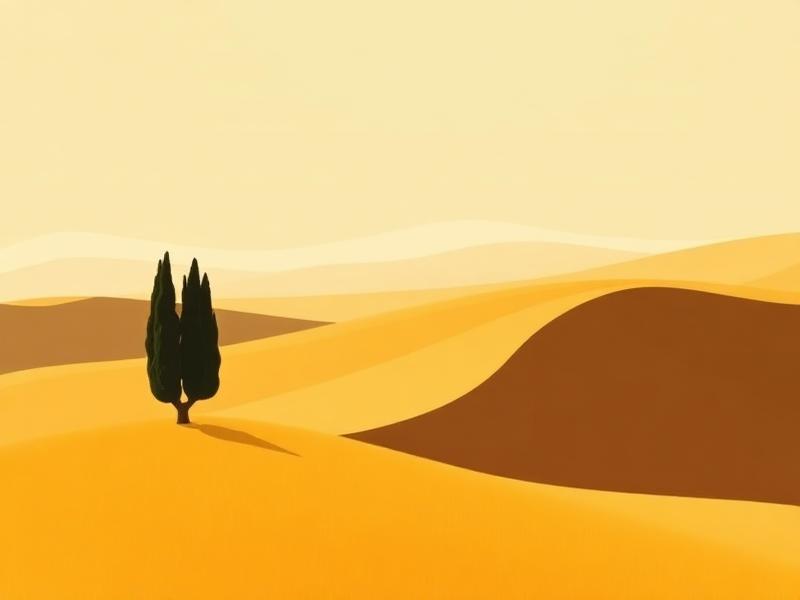
Chianti is wooded, enclosed and full of vineyards you drive between. Val d'Orcia is open — long views, bare ridges, very few trees. It photographs completely differently, and it is the reason most couples come.

The cost of that openness is shade, and distance. There is little natural shelter from sun or wind on a ridge, and the villages are small enough that everything — beds, restaurants, suppliers, a chemist — is further away than you expect.

Getting here

This is the longest transfer in Tuscany. Florence and Pisa are the region's two main airports, and Val d'Orcia is south of Siena — well beyond both. Rome is sometimes a realistic alternative for guests, depending on where they are flying from.

Whatever they choose, the final leg is a drive of some length on roads that are beautiful and slow, several of them *strade bianche* — the white gravel roads that appear in every photograph of this landscape and are less charming in a hired saloon at night.

Build arrival into the plan. Guests who land in the morning will not be at the welcome dinner refreshed, and a wedding here works best when people come for several days rather than a weekend.

Beds are the binding constraint

The five comuni of the park are small towns and villages. There is no city hotel stock to absorb a guest list.

This makes accommodation the first thing to check, before the venue and before the date. Ask how many the property sleeps, what is within a fifteen-minute drive, and whether there is enough of it in the month you are considering — this landscape draws visitors independently of you.

It is also why Val d'Orcia suits smaller weddings particularly well. Thirty guests who all sleep on the estate is a very different logistical proposition from ninety spread across four villages.

When to come

The landscape people picture — gold hills, hard shadows — is the dry summer landscape. In spring the same hills are green, which is beautiful and is not the photograph you have in your head. Decide which one you actually want before setting a date.

The regional pattern holds: July and August are the driest and hottest, May and early June the most comfortable, September and October progressively wetter. Heat matters more here because there is so little shade; an afternoon ceremony on an exposed ridge in July is a genuine endurance test for older guests. Our best months guide has the figures.

The kinds of venue you will find

Agriturismi and farm estates, the most common option — working properties with a handful of rooms and outdoor space.

Small borghi and hamlets, sometimes hired whole, where your party occupies the entire village.

Historic residences in and around Pienza and Montalcino, generally small.

Wine estates, particularly around Montalcino, where Brunello is the local business.

What you will not find much of is scale. Properties here are mostly built for tens rather than hundreds, and that is part of the character. The venues guide covers what to ask. See also Montalcino and Montepulciano, which sit at the edges of this landscape.

Worth knowing before you commit

Ceremony fees are not published here. Montepulciano and San Gimignano, the nearest comuni whose tariffs we tried to obtain, provide them on request only. Email the stato civile office of your comune early: the fee, the available slots and the permitted settings all arrive in the same reply.

Plan for shade and water. Whatever the month.

Suppliers travel. Florists, caterers and photographers may be coming from Siena or Florence, and travel costs appear in the quote. Ask.

Nothing is quick. Not the roads, not the shops, not the comune in August. That is much of the appeal — it just has to be planned for rather than discovered.

Sources

The figures, rules and deadlines on this page come from these — comuni, regional bodies and official registers, not other wedding sites. Rules change; confirm anything you are about to act on.

  1. whc.unesco.org · checked 14 September 2026 Val d'Orcia inscribed 2004 under criteria (iv) and (vi); 61,187.96 ha with 5,660.08 ha buffer; boundary coincides with the Parco della Val d'Orcia established 1999 across Montalcino, Pienza, San Quirico d'Orcia…
  2. www.comune.montepulciano.si.it · checked 14 September 2026 Montepulciano: ceremony tariffs provided on request only
  3. www.lamma.toscana.it · checked 14 September 2026 Regional climate pattern, Florence normals 1991–2020

Keep planning your Val d'Orcia wedding

Related planning guides

Where to marry

Tuscany is not one place, and the eleven areas couples usually choose between suit genuinely different weddings. This page is a way of deciding rather than a ranking: the four questions that actually separate the areas, and what each one means for the day you are planning. The detail for each area lives on its own page.

Read guide

How much does it cost?

Almost every figure you will read about Tuscany wedding costs is someone's estimate presented as a fact. This page takes a different approach. It sets out the costs that are genuinely published — town hall fees, stamp duties, consular charges, all of them sourced and linked — and then explains, without inventing numbers, how the quotes for everything else are built and what moves them. It is less tidy than a price list. It is also true.

Read guide

Legal requirements

Most of the paperwork for an Italian wedding comes down to one question: can the registrar see proof that nothing in your own country's law prevents you from marrying? That proof is called a nulla osta, and where you get it depends entirely on which passport you hold. This page sets out the steps in the order you will meet them, and says clearly where the answer depends on your own embassy and the particular town hall.

Read guide

Checklist

Most wedding checklists are built around a generic timeline. This one is built around the deadlines that actually exist in Italy — the notice periods comuni publish, the expiry dates on consular documents, and the handful of things that can only be done in person. Where a date is fixed by an authority, it is sourced. Where it is judgement, it says so.

Read guide

Related vendors

Planning a wedding in Val d'Orcia?

Discover venues, vendors and guides made for couples planning from abroad.

Start planning your wedding
Get matched Request quotes